
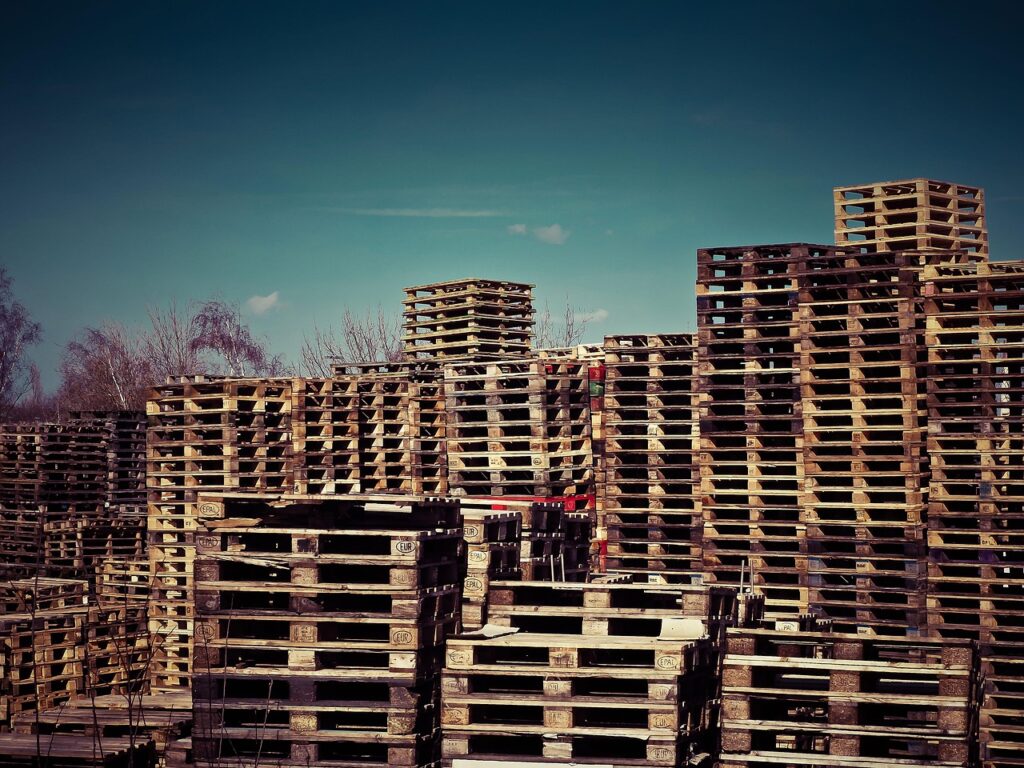
Wooden pallets manufacturers play a crucial role in supply chains by producing durable, reusable platforms designed for transporting and storing goods. These manufacturers work with various types of wood and tailoring standards to meet specific industry needs.
They ensure quality, compliance with safety regulations, and customization options, making their products essential for efficient logistics and warehouse management. Choosing the right manufacturer can impact cost, sustainability, and operational efficiency.
Many manufacturers also offer services like repair and recycling, supporting eco-friendly practices in packaging and distribution. Understanding these aspects helps businesses make informed decisions about their pallet sourcing.
Wooden Pallets Manufacturing Process
The wooden pallets manufacturing involves specific choices in raw material, design criteria tailored to load and usage, and distinct production methods designed for efficiency and durability. Each stage impacts the final product’s performance in logistics and shipping.
Material Selection and Sourcing
Manufacturers prioritize hardwoods like oak, maple, and birch, or softwoods such as pine and fir, depending on strength and cost requirements. Wood quality must be free from pests, knots, and excessive moisture to prevent damage and ensure longevity.
Sourcing often involves sustainable forestry practices or reclaimed wood to meet environmental standards. Wood is inspected for thickness, grain uniformity, and moisture content, typically maintained between 15% and 20% to reduce warping and fungal growth.
Pallet Design and Customization
Pallet designs vary to suit load type, weight, and handling equipment. Standard sizes include 48″x40″ for North American markets and 1200×1000 mm for Europe.
Design features include number and placement of deck boards, stringers, and blocks to balance strength and material use. Custom pallets might incorporate reinforced corners, fumigation treatments, or specific nail patterns to meet customer specifications or regulatory compliance.
Production Techniques
The process includes cutting raw lumber to size, drying, assembling, and fastening components. Automated saws and nail guns improve speed and accuracy in high-volume facilities.
Assembly involves placing deck boards on stringers or blocks and securing with nails or staples. Some manufacturers apply surface treatments like heat treatment or chemical fumigation to reduce pests and meet export regulations. Quality control ensures dimensional accuracy and structural integrity before shipment.
Quality Standards for Wooden Pallets
Wooden pallets must meet specific criteria to ensure they perform effectively during transport and storage. Key considerations include structural integrity, resistance to damage, and compliance with environmental regulations.
Durability and Safety Testing
Manufacturers test wooden pallets for load capacity and resistance to impact and weather conditions. Pallets must support heavy and uneven loads without breaking or deforming.
Common tests include static load testing, which measures the maximum weight a pallet can hold while stationary, and dynamic load testing, which assesses performance during movement. Safety certifications often require pallets to pass these tests to ensure worker protection and cargo security.
Additionally, pallets are checked for loose nails, splinters, and other hazards. These inspections prevent injuries and damage to goods, important for compliance with workplace safety standards.
Environmental Considerations
Wooden pallet producers increasingly apply environmental standards to reduce waste and pollution. They use sustainably sourced wood, often certified by organizations like the Forest Stewardship Council (FSC).
Heat treatment or fumigation is applied to meet International Standards for Phytosanitary Measures (ISPM 15), preventing pest contamination during international shipping. This process is essential for regulatory compliance.
Recycling and repair practices extend the pallet lifecycle, reducing the demand for new timber. Some manufacturers use eco-friendly adhesives and coatings to minimize environmental impact during production.